

If all religions can lead to God and there may not be any souls in hell, couldn’t it be argued that all departed men and women are, in fact, already enjoying eternal beatitude? And if that were the case, then obviously it would render canonization quite redundant. What exactly does the post-conciliar Vatican mean by salvation, sanctity and canonization? Devil’s advocates everywhere would like to know.
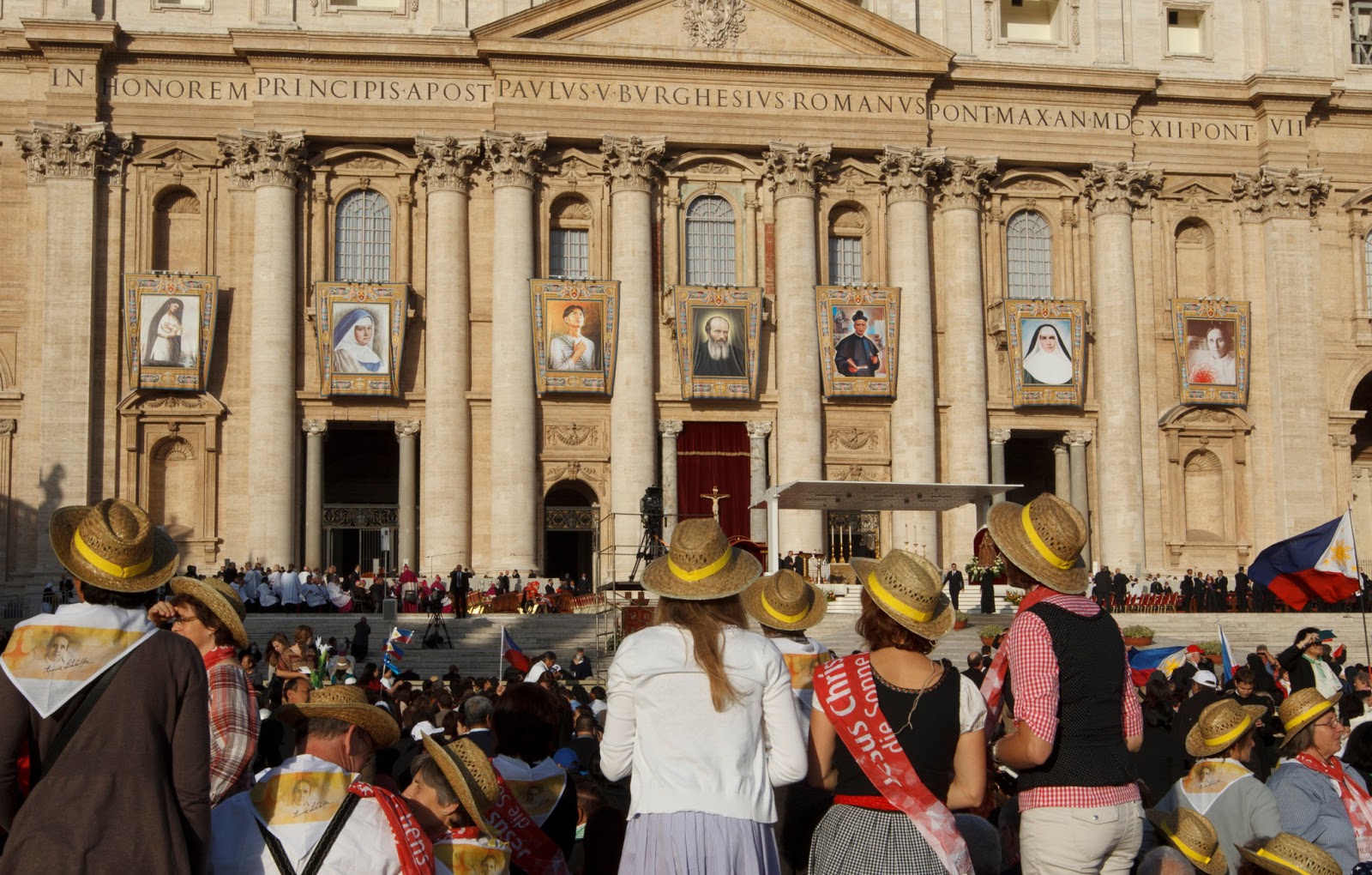
As the days go by, we are getting closer to the scheduled canonizations of Blesseds John XXIII and John Paul II. Most Catholics, unaware of the true significance of this event, are looking forward to a worldwide celebration of these two popular popes. John XXIII is remembered by older generations as “Good Pope John”, a moniker given due to both his affectionate demeanor and media praise for opening the Church to the world.
Similarly, John Paul II was, and is still, very popular due to his personal charisma, globetrotting travels, and fantastical World Youth Days. Thus, a certain cult of personality has developed around both men. In the case of Blessed John Paul, the fervor for his canonization has not subsided from the time of his death in 2005.


Beyond personal popularity with the world, however, lie deeper questions over whether either of these men would meet the Traditional standards for beatification or canonization. This is due to the unprecedented and novel acts of both popes, as well as the undeniably disastrous fruits of both of their pontificates. Even the Vatican recognizes the problematic aspects of Blessed John Paul’s pontificate. So much so that on April 1, 2011 Cardinal Angelo Amato, prefect of the Congregation for Saints’ Causes took the unprecedented step of clarifying the reason for John Paul II’s beatification:
The Remnant Newspaper summarized these troubling questions regarding John Paul II’s beatification in A Statement of Reservations Concerning the Impending Beatification of Pope John Paul IIon March 21, 2011. This statement garnered thousands of signatures in less than a month and was eventually presented to Angelo Cardinal Amato, Prefect of the Congregation for the Causes of Saints. Sigue leyendo

 Ortodoxia Católica